Ready to use, reliable to control.
Ready-to-use agar and broth media and nutrient pad sets for microbiological quality control of water, food and beverages. No weighing, boiling or sterilising: open, prepare and sample.
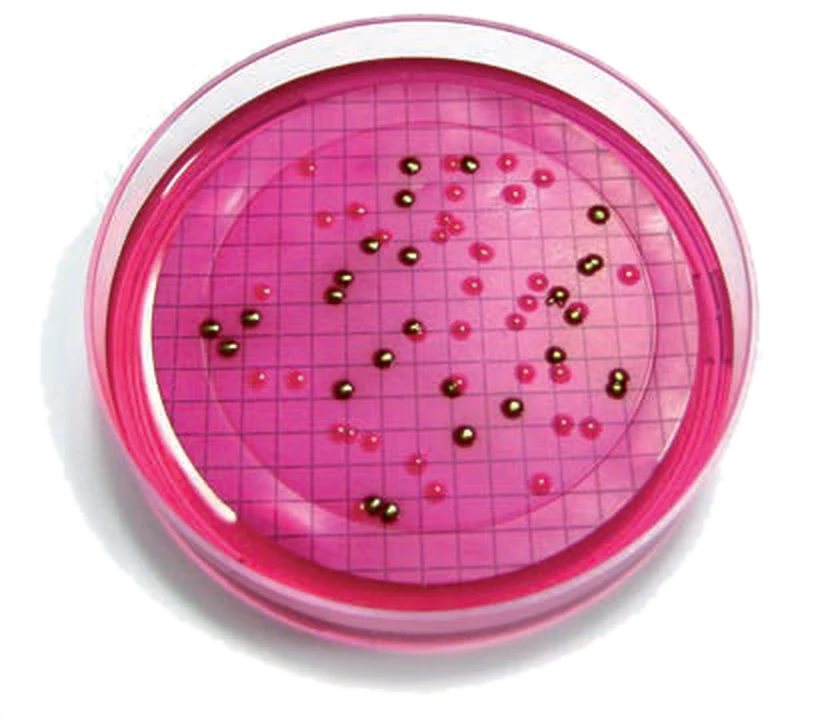
 Media, broths and NPS
Routine control needs media that are the same from batch to batch. Ready-to-use media shorten preparation and reduce the chance of error.
Choose the medium to suit your workflow.
Agar and broth media come sterile-filled, while nutrient pad sets are dry, long-lasting and stored at room temperature.
Ready-to-use agar and broth media
Autoclavable polycarbonate bottles of 50 and 250 ml or 20 ml glass tubes, sterile-filled and ready to use. Broths are used immediately, while agar is melted in a water bath at 95–100 °C and cooled to about 50 °C before plates are poured. Unopened packs keep for 3–9 months, depending on the type.
| Medium | Standard | Item no. (pack) |
|---|---|---|
| Rinsing solution | — | 5128-24 (24×250 ml) |
| Post-rinsing solution | — | 5129-24 (24×250 ml) |
| Azide Dextrose Broth, 1× with membrane filters | MineralwV, TrinkwV | 5140 (25 tests) |
| Azide Dextrose Broth, 2× | TrinkwV | 5010 (4×100 ml) |
| BAT-Agar with membrane filters | — | 4012 (24×10 ml)5012 (4×125 ml) |
| BfB-Broth (beer spoilage bacteria) | — | 4008 (25×20 ml) |
| BfW-Broth (wild yeasts) | — | 4056 (25×20 ml) |
| Beer-Agar | — | 5015 (4×250 ml) |
| Caso-Agar, TSA | EP, USP, DIN EN ISO 9308-1 | 4020 (25×20 ml)5020 (4×250 ml) |
| Caso-Broth, TSB | EP, USP | 4021 (25×20 ml)5023 (4×250 ml) |
| Cetrimide-Agar | DEV, EP, USP | 4025 (25×20 ml)5021 (4×250 ml) |
| Colichrom-Agar | TrinkwV, DIN EN ISO 9308-1 | 4028 (25×20 ml)4028-100 (100×20 ml)5025 (4×250 ml)5025-24 (24×250 ml) |
| Diastaticus-Agar | — | 4027 (25×20 ml)4027-100 (100×20 ml) |
| Diastaticus-Broth with Durham tube | — | 4029 (25×20 ml)4029-100 (100×20 ml) |
| DRCM-Broth, dehydrated | MineralwV, TrinkwV | 4030 (25 tests, 20 ml sample)5160 (25 tests, 50 ml sample) |
| Endo-Agar | APHA | 4040 (25×20 ml)5030 (4×250 ml) |
| Enterococcus Selective Agar (Slanetz & Bartley) | MineralwV, TrinkwV, EN ISO 7899 | 5240 (25×20 ml)5241 (4×250 ml) |
| Bile Esculin Azide Agar | MineralwV, TrinkwV, EN ISO 7899 | 5250 (25×20 ml)5251 (4×250 ml) |
| Gelatine-Agar | MineralwV, TrinkwV | 4045 (25×20 ml)4045-100 (100×20 ml)5035 (4×250 ml)5035-24 (24×250 ml) |
| Yeast Extract-Agar | TrinkwV, DIN EN ISO 6222 | 4047 (25×20 ml)4047-100 (100×20 ml)5036 (4×250 ml)5036-24 (24×250 ml) |
| King B-Agar | MineralwV, TrinkwV | 5270 (25×20 ml)5271 (4×250 ml) |
| Crystal Violet-Agar | — | 4051 (25×20 ml)5038 (4×250 ml) |
| Copper Sulphate-Agar | — | 5039 (4×250 ml) |
| Lactose-Broth, 1× with Durham tube and membrane filters | MineralwV, TrinkwV | 5130 (25 tests) |
| Lactose-Broth, 2× | TrinkwV | 5040 (4×100 ml)5040-24 (24×100 ml) |
| Lactose-Broth, 6× | — | 5044 (4×250 ml)5044-24 (24×250 ml) |
| Lysine-Agar | — | 4055 (25×20 ml)5042 (4×250 ml) |
| Malachite Green-Broth, 1× with membrane filters | MineralwV, TrinkwV | 5150 (25 tests) |
| Malachite Green-Broth, 2× | MineralwV | 5050 (4×100 ml)5050-24 (24×100 ml) |
| Malt Extract-Agar | — | 4060 (25×20 ml)4060-100 (100×20 ml)5060 (4×250 ml)5060-24 (24×250 ml) |
| Malt-Broth with Durham tube | — | 4058 (25×20 ml)5059 (4×250 ml) |
| MRS-Agar | — | 4061 (25×20 ml)4061-100 (100×20 ml)5061 (4×250 ml)5061-24 (24×250 ml) |
| MRS-Broth | — | 4062 (25×20 ml)5062 (4×250 ml) |
| MRS-Broth with indicator | — | 5063 (4×250 ml) |
| Nutrient-Agar | TrinkwV, DEV, DIN EN ISO 16266 | 4080 (25×20 ml)4080-100 (100×20 ml)5080 (4×250 ml)5080-24 (24×250 ml) |
| Nutrient-Broth (sterility test, etc.) | — | 4090 (25×20 ml)5081 (4×250 ml) |
| Orange Serum-Agar | APHA | 4095 (25×20 ml)5085 (4×250 ml)5085-24 (24×250 ml) |
| Orange Serum-Agar pH 3.4 | — | 4097 (21×20 ml) |
| Plate Count-Agar | APHA | 4100 (25×20 ml)5090 (4×250 ml)5090-24 (24×250 ml) |
| Pseudomonas CN-Agar | TrinkwV, DIN EN ISO 16266 | 5280 (25×20 ml)5281 (4×250 ml) |
| R2A-Agar | EP, USP | 4125 (25×20 ml)5095 (4×250 ml) |
| RV-Broth | — | 4007 (25×10 ml)5097 (4×250 ml)5097-24 (24×250 ml) |
| RV-Broth with swabs | — | 4017 (60 tests) |
| Sabouraud-Agar | ILV, EP, USP | 4130 (25×20 ml)5100 (4×250 ml) |
| Standard-Agar | — | 4135 (25×20 ml)4135-100 (100×20 ml)5101 (4×250 ml)5101-24 (24×250 ml) |
| Tryptophane Peptone Water | TrinkwV, DIN EN ISO 9308-1 | 5220 (25 tests) |
| Wort-Agar | — | 4150 (25×20 ml)5110 (4×250 ml)5110-24 (24×250 ml) |
| YGC-Agar | — | 5120 (4×250 ml) |
No results for this search.
Nutrient pad sets (NPS)
Sterile dry media on biologically inert cellulose pads. Once moistened they are ready at once; the nutrients are not bound and are fully available to microorganisms. They are stored at room temperature for up to 2 years.
Pack: set of 50 (item number from the table) or 100 (same number with the -H suffix). Each set contains sterile NPS in sterile Petri dishes and individually packed sterile 50 mm membrane filters. Other filter types (colour, porosity), 47 mm diameter and filters for common dosing systems are available on request.
| NPS type | Item no. 50 / 100 pcs | Application | Membrane filter | Incubation | Colony appearance |
|---|---|---|---|---|---|
| Total colony count (heterotrophic, mesophilic bacteria) | |||||
| Caso-NPS | 1030 / 1030-H | Colony count from water, food and cosmetics | green, 0.45 µm, gridded | 1–3 days, 37 °C | Beige, coloured where pigmented |
| Yeast Extract-NPS | 1081 / 1081-H | Colony count from water and wastewater | green, 0.45 µm | 2–3 days, 30 °C | Beige |
| mTGE-NPS | 1113 / 1113-H | Colony count from water, food and other samples | green, 0.45 µm | 1–3 days, 37 °C | Beige |
| Plate Count-NPS | 1140 / 1140-H | Colony count from water, milk and food | green, 0.45 µm | 2–3 days, 30 °C | Beige |
| R2A-NPS | 1155 / 1155-H | Water; low-nutrient medium for demanding and stressed aquatic bacteria | green, 0.45 µm | 3–5 days, 20 °C or 1–3 days, 35 °C | Beige |
| Standard-NPS | 1190 / 1190-H | Water, wastewater, beverages | green, 0.45 µm | 2–3 days, 20 °C or 1–2 days, 30 °C | Beige |
| Standard-I NPS | 1191 / 1191-H | Water, wastewater, beverages | green, 0.45 µm | 2–3 days, 20 °C or 1–2 days, 30 °C | Beige |
| Standard TTC-NPS | 1200 / 1200-H | Water, wastewater, beverages | green, 0.45 µm | 2–3 days, 20 °C or 1–2 days, 30 °C | Reddish colonies (TTC, formazan) |
| E. coli and coliforms | |||||
| Colichrom-NPS | 1035 / 1035-H | Selective rapid detection of E. coli, coliforms and non-coliforms in water, wastewater and beverages | white, 0.45 µm, gridded | 21–24 h, 36 ± 2 °C | E. coli blue, other coliforms reddish, non-coliforms beige; Gram-positive flora inhibited by bile salts |
| Endo-NPS | 1090 / 1090-H | Coliforms from water and wastewater | white, 0.45 µm | 20 ± 4 h, 37 ± 1 °C | Red colonies (fuchsin), E. coli more intense, sometimes with a metallic sheen |
| mFC-NPS | 1100 / 1100-H | Faecal coliforms from wastewater | white, 0.45 µm | 16–24 h, 44 °C | E. coli blue colonies after only 16 h |
| Tergitol TTC-NPS | 1220 / 1220-H | Coliforms from water and wastewater | white, 0.45 µm | 18–24 h, 37 ± 1 °C | Yellow to yellow-orange colonies with a yellow halo; lactose-negative colonies red |
| Enterococci | |||||
| Azide-NPS | 1010 / 1010-H | Enterococci from water and other samples | white, 0.45 µm | 44 ± 4 h, 37 ± 1 °C | Small dark red colonies; other flora inhibited by azide |
| Pseudomonads | |||||
| Cetrimide-NPS | 1040 / 1040-H | Ps. aeruginosa from water and cosmetics | white, 0.45 µm | 44 ± 4 h, 37 ± 1 °C | Blue-green colonies with a blue halo |
| Pseudomonas CN-NPS | 1145 / 1145-H | Ps. aeruginosa from water and wastewater | white, 0.45 µm | 44 ± 4 h, 37 ± 1 °C | Blue-green colonies with a blue-green halo; inhibition by cetrimide and nalidixic acid |
| Lactic acid bacteria | |||||
| Beer-NPS | 1020 / 1020-H | Beer spoilers (Lactobacillus, Pediococcus, Zymomonas) | green, 0.45 µm | 2–4 days, 30 °C, anaerobic | Yeasts and moulds suppressed (actidione) |
| MRS-NPS | 1110 / 1110-H | Lactic acid bacteria from soft drinks and food | green, 0.45 µm | 2–4 days, 28 °C, anaerobic | Yeasts and moulds suppressed |
| Wine-NPS | 1230 / 1230-H | Wine spoilers (Leuconostoc, Lactobacillus, Pediococcus; Acetobacter under aerobic conditions) | green, 0.45 µm | 2–5 days, 30 °C, anaerobic | Yeasts and moulds suppressed |
| Yeasts and moulds | |||||
| Brettanomyces-NPS | 1025 / 1025-H | Brettanomyces from wine, beer and fruit juices | green, 0.45 µm | 4–7 days, 25 °C | Yellow to orange-yellow colonies with a yellow halo |
| Lysine-NPS | 1095 / 1095-H | Wild yeasts in breweries | black, 0.8 µm, gridded | 2–5 days, 25 °C | Only wild yeasts use lysine; white to cream colonies |
| Malt Extract-NPS | 1099 / 1099-H | Yeasts and moulds from beverages and food | black, 0.6 µm | 2–5 days, 25–30 °C | Yeasts white/cream, moulds with white mycelium |
| OGY-NPS | 1115 / 1115-H | Yeasts and moulds from food and fruit juice | black, 0.6 µm | 2–5 days, 25–30 °C | Low pH and oxytetracycline inhibit bacteria |
| Osmophile-NPS | 1130 / 1130-H | Osmophilic and osmotolerant yeasts and moulds from sugar and confectionery | black, 0.8 µm | 5–7 days, 25–30 °C | High sugar content inhibits other flora |
| PRY-NPS | 1143 / 1143-H | Preservative-resistant yeasts (e.g. Zygosaccharomyces) | black, 0.45 µm | 3–5 days, 25 °C | White to beige |
| Sabouraud-NPS | 1160 / 1160-H | Yeasts and moulds from cosmetics and packaging; dermatophytes | black, 0.8 µm | 2–5 days, 25–30 °C | Yeasts white/cream |
| Schaufus Pottinger-NPS | 1180 / 1180-H | Yeasts and moulds from sugar and soft drinks | black, 0.8 µm | 2–3 days, 25–30 °C | pH indicator changes from blue-green to yellow with acid producers |
| Wort-NPS | 1260 / 1260-H | Yeasts and moulds from beverages and food | black, 0.6 µm | 2–3 days, 25 °C | Yeasts white/cream |
| Special microorganisms | |||||
| BAT-NPS | 1015 / 1015-H | Alicyclobacillus from sweetened beverages | white, 0.45 µm | 2–5 days, 43–45 °C | Cream colonies |
| Chapman-NPS | 1050 / 1050-H | Pathogenic staphylococci from food and cosmetics | white, 0.45 µm | 24–48 h, 37 °C | S. aureus yellow colonies with a yellow halo |
| Dextrose Tryptone-NPS | 1070 / 1070-H | Mesophilic and thermophilic spore formers from sugar and food | white, 0.45 µm | 2–3 days, 30 °C (mesophilic) or 1–2 days, 55 °C (thermophilic) | “Flat-sour” B. coagulans green-yellow with a yellow halo |
| Orange Serum-NPS pH 5.5 | 1120 / 1120-H | Acidophilic and acid-tolerant microorganisms from beverages and food | green, 0.45 µm | 2–3 days, 30 °C | Yeasts, moulds and acid-tolerant bacteria |
| Orange Serum-NPS pH 3.1 | 1121 / 1121-H | Acidophilic and acid-tolerant microorganisms from beverages and food | green, 0.45 µm | 2–3 days, 30 °C | Yeasts, moulds and acid-tolerant bacteria |
| Weman-NPS | 1240 / 1240-H | Slime-forming bacteria from sugar and soft drinks | green, 0.45 µm | 2–3 days, 30 °C | Colourless, drop-like colonies (Leuconostoc) |
| Bismuth Sulphite-NPS | 1250 / 1250-H | Selective detection of Salmonella | white, 0.45 µm | 24–48 h, 37 °C | Dark brown to black colonies, light edge, black halo |
No results for this search.
Accessories for working with media
Accessories for preparing and working with agar media and NPS.
| Accessory | Description | Item no. |
|---|---|---|
| M&S Petri dishes | Sterile, lid outer diameter 60 mm, base inner diameter 55 mm, height 12 mm, 500 pcs | 6060-500 |
| Dosing syringe | Adjustable volume up to 5 ml, self-filling, Luer-Lock, autoclavable | 6100 |
| Sterile water | 5 × 10 ampoules of 3.5 ml for moistening NPS | 6105 |
| UV lamp | 366 nm for the ECD method, with battery | 6110 |
No results for this search.
Preparing NPS step by step.
An animated walkthrough of the manufacturer’s instruction: membrane filtration, the streak plate method and disposal after the analysis. About 50 seconds long.
Illustrated animation prepared by APICAL from the manufacturer’s “Instruction for Use of Nutrient Pad Sets (NPS)”, 09/2014. It does not replace the original instruction.
What working with NPS looks like.
The procedure is simple and needs no medium preparation. The manufacturer’s instructions are supplied with the product.
The data were compiled from the manufacturer’s publicly available catalogue and website; details, standards, item availability and pack sizes are confirmed for each order. The manufacturer provides a technical and a safety data sheet for each item. Special packs and versions for small quantities are available on request. The media are intended for microbiological quality control, not for diagnostics.
Technical and safety data sheets: Agar and broth media · Nutrient pad sets (NPS) · Catalogue (PDF)
- 1Moisten the NPS
Add 3 – 3.5 ml of sterile, distilled or demineralised water to the pad in its Petri dish.
- 2Filter the sample
Filter the sample through a sterile membrane filter and place the filter on the pad.
- 3Incubate
Incubate as shown in the table: temperature and duration depend on the medium.
- 4Read the colonies
Count the colonies; appearance and colour help identify the target microorganisms.
Send us your media list.
Tell us the media or standards you need, the expected monthly consumption and your working method (agar plates or membrane filtration). APICAL will prepare a quotation.